I think I want to take this class because I had a doubt in myself whether I can create moving parts. I do have an idea for what to make - perhaps a crab pincer me and Shloka found at Fire Island as a hand to forge our signature (interested to know how different basic shapes that make up a signature could be mapped to different mechanism). The previous idea is funny and feels satisfying (because something can sign for me). But I also want to give a chance to think what kind of work can be challenging the system itself. Something that comes up first in mind: how can an automata be doing something that builds on itself? Perhaps instead of installing all the mechanics in place, it could actively move the mechanic piece to a designated place which will result in the automaton moving in different way. It is kind of asking an AI to generate a prompt that will be fed back to itself (?).
I’m going to talk about both ideas.
Autosignature
So apparently there’s already a popular automaton for it - autopen https://en.wikipedia.org/wiki/Autopen. “many public figures employ autopens to allow their signature to be printed on demand and without their direct involvement”. Unrelated comment to the class: the autopen creates a new strata of monetary and status value to signature.. now we place different value on real handwritten signature vs the mechanical one. If I made this automaton myself, I feel like I still own the signature though, so it does not necessarily mean it is fake to me (since I own and made the means to produce it anyway). I just thought it is interesting that the concept of objects directly handmade by something (does not necessarily have to be human, could be machine, as long as it is the origin copy) is priced over a mechanized copy of it.
“Early autopens used a plastic (PMMA) matrix of the original signature, which is a channel cut into an engraved plate in the shape of a wheel. A stylus driven by an electric motor followed the x- and y-axis of a profile or shape engraved in the plate. The stylus is mechanically connected to an arm which can hold almost any common writing instrument, so that one's pen and ink can be used to suggest authenticity. The autopen signature is made with even pressure and indentation in the paper, which is how these machines are distinguishable from original handwriting where the pressure varies”
The first autopen - called polygraph - is by Hawkins and it works by moving a pen with user’s hand that will move another pen, therefore while user is autographing 1 signature, it simultaneously autographs a few other. I actually really like this now since it reminds me of how humans train AI robot by doing motion capture on real actors and then the AI robot gets to learn new movement through the transfer of the body pose.
I also found the automaton input part, often has to do with us doing rotation to move the rest of the part in magical way (that does not always look like rotation at the end). Perhaps there could be a conceptual linkage between the input gesture to the output (signature) that can be a novel aspect we can add to this autopen idea.
There is other input mechanism i can consider too:
1. piston / slide pump - what if there’s a pump that pumps air on a path on sand? signing on a sand?
2. pull release input w drawstring - what if pulling a mannequin hair makes it go sign the signature?
3. squeeze
4. gravity trajectory - dropping a weight
— Toy —
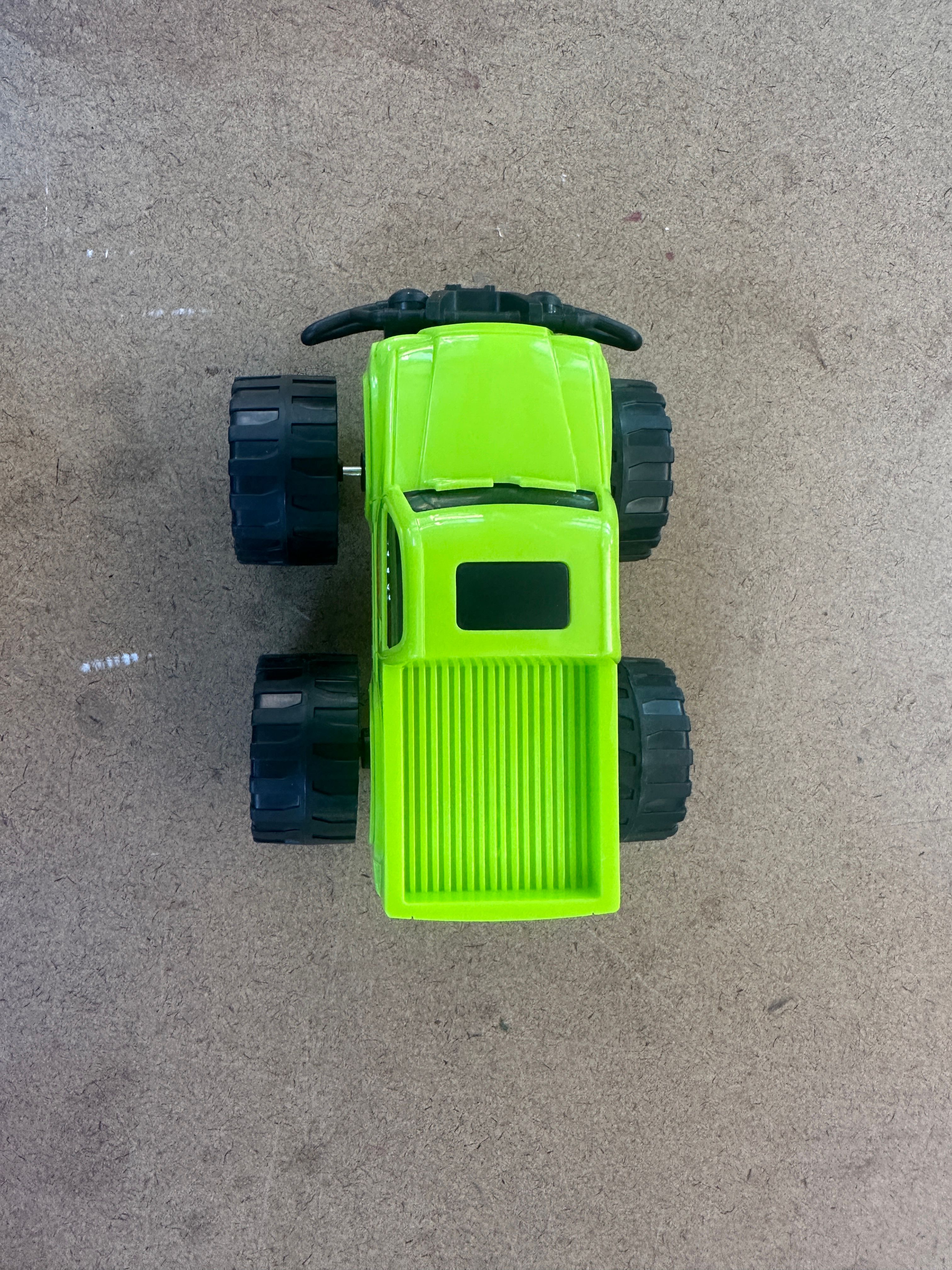
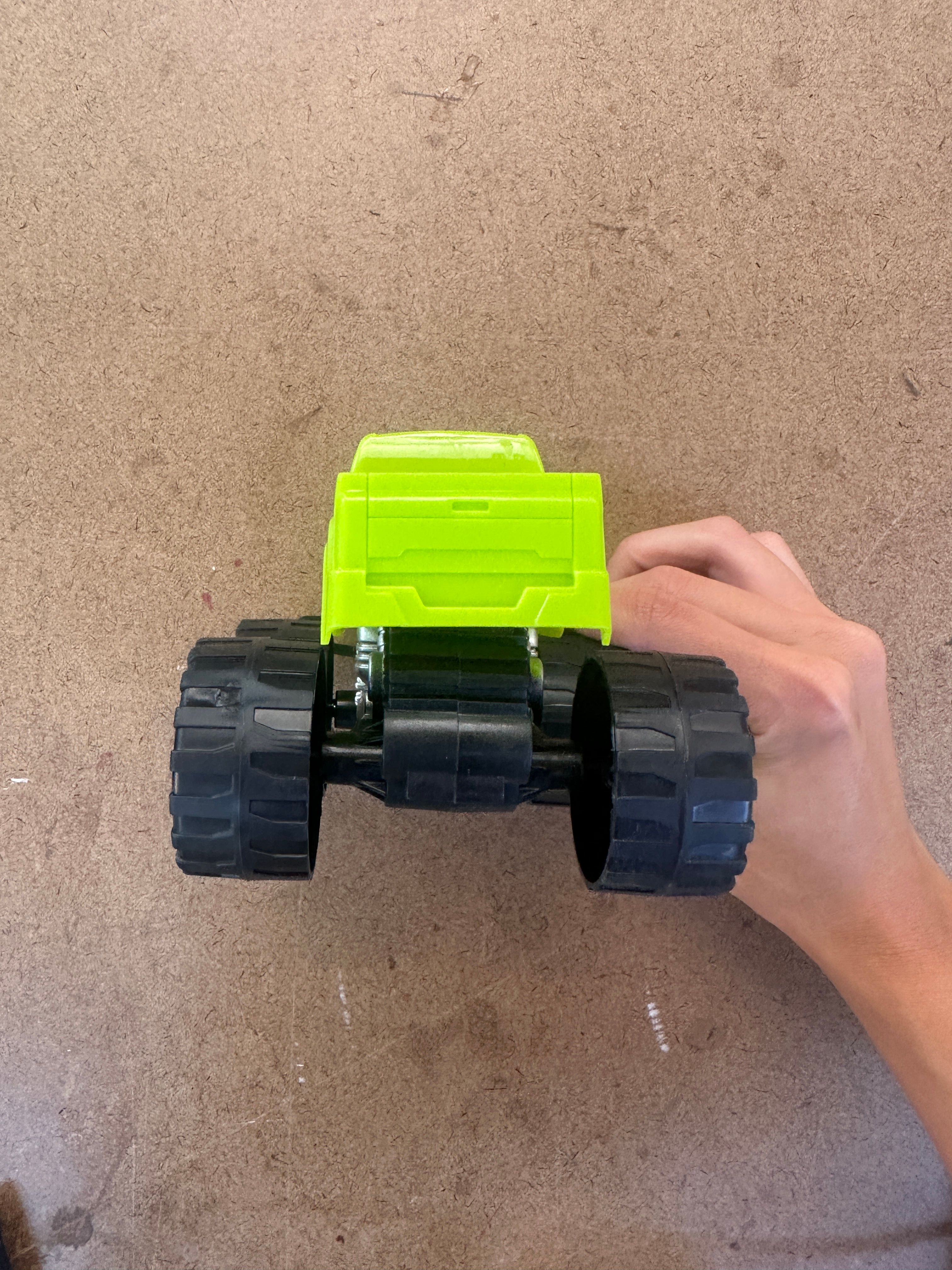
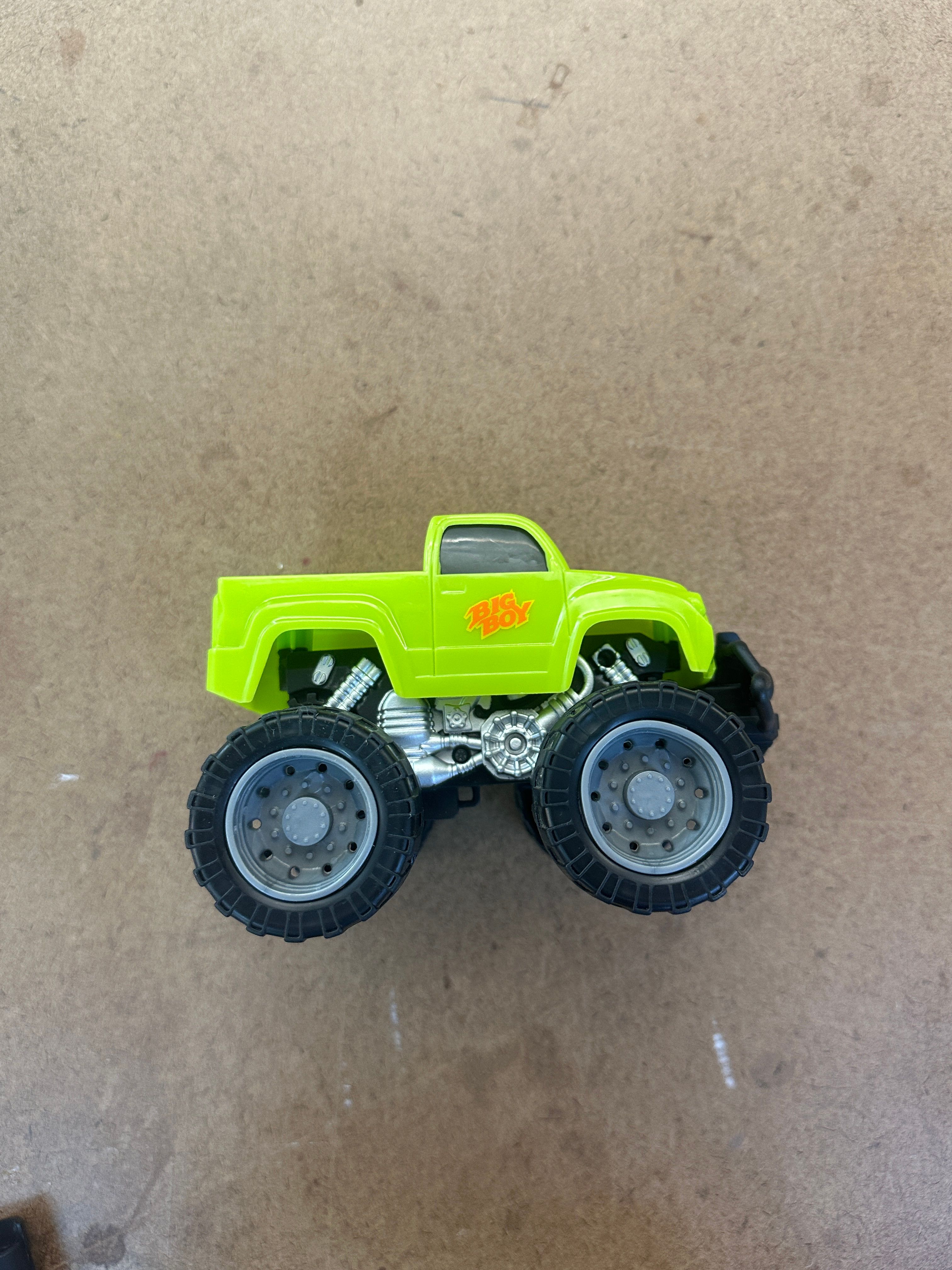
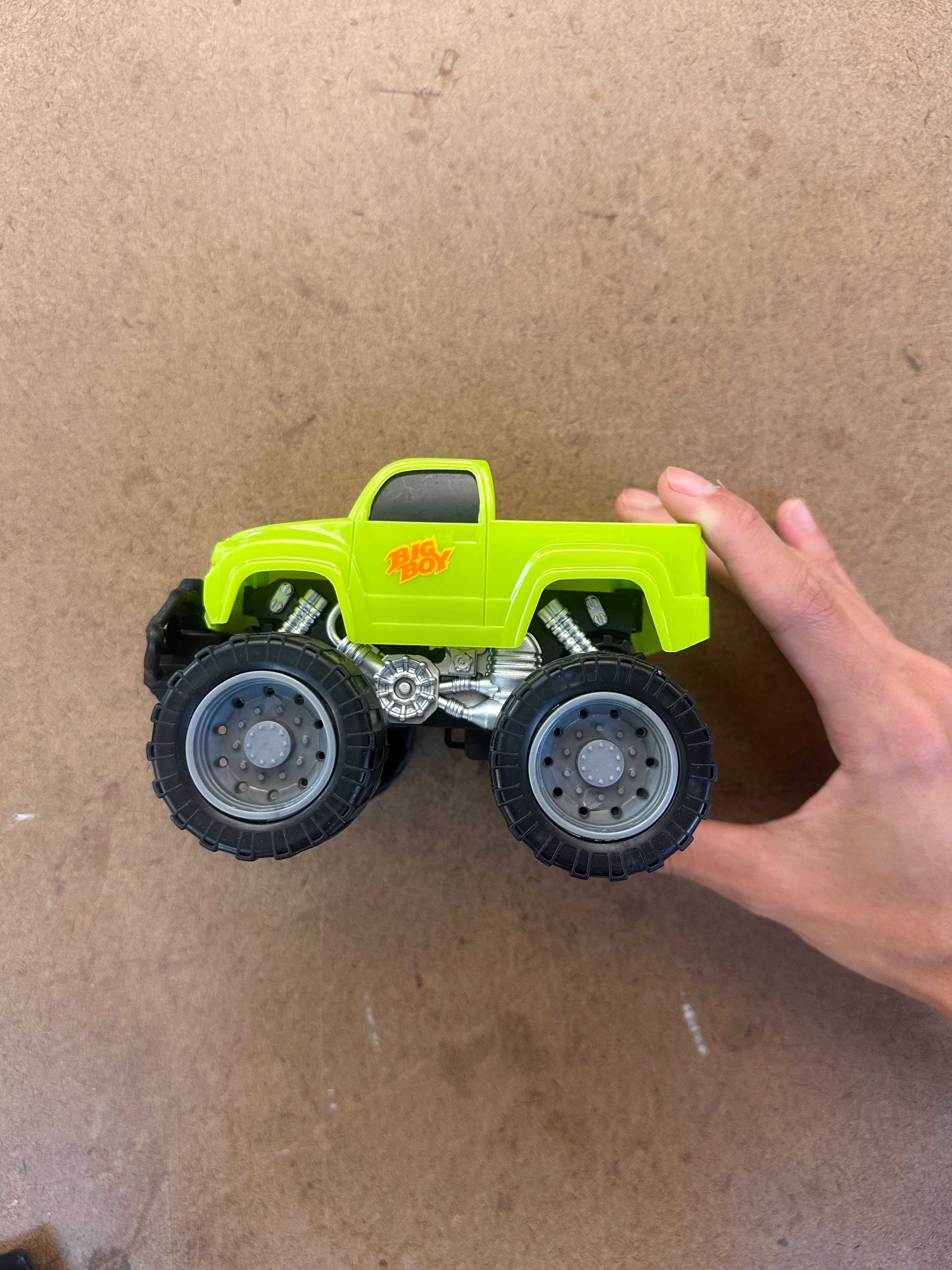
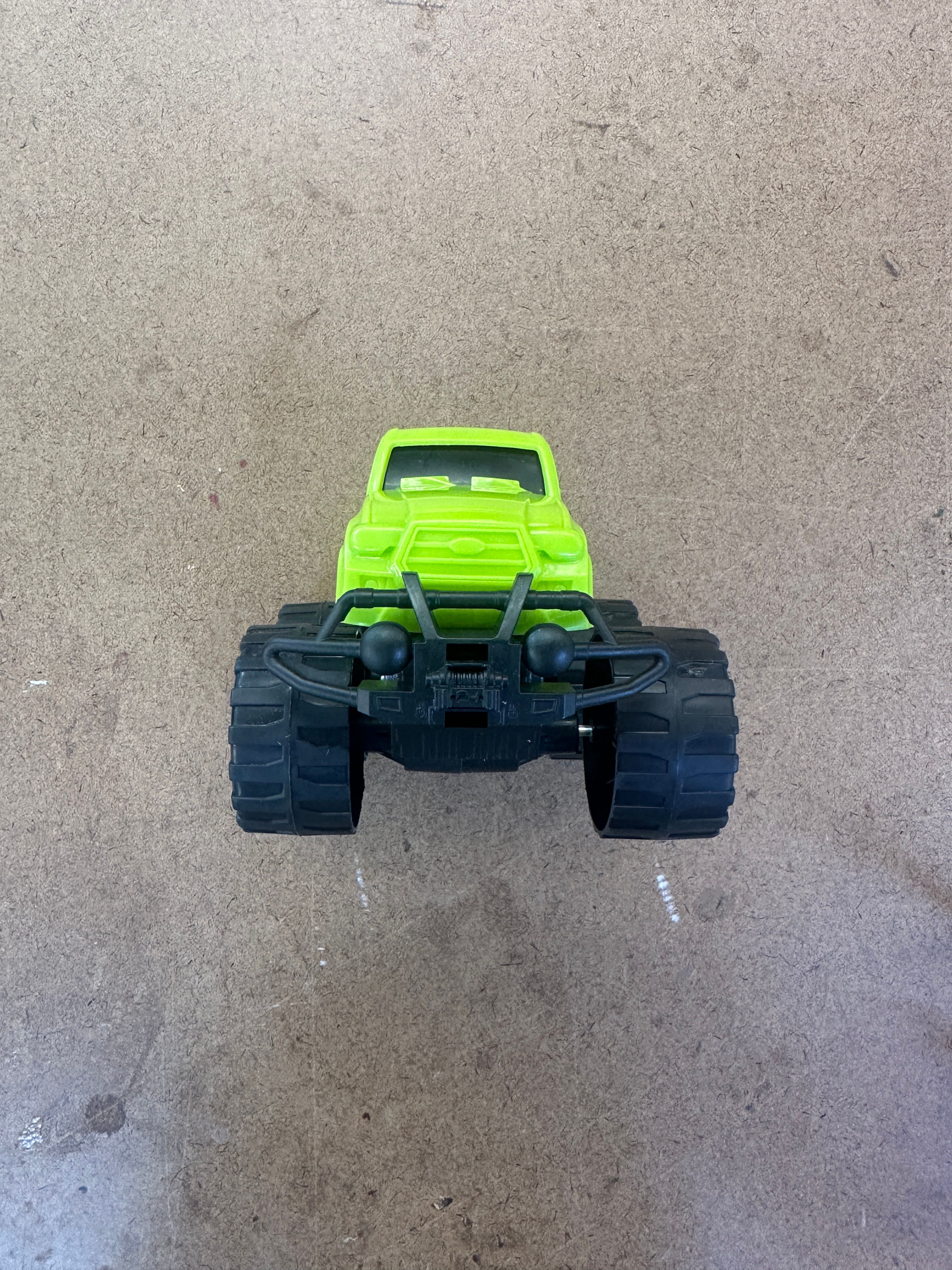
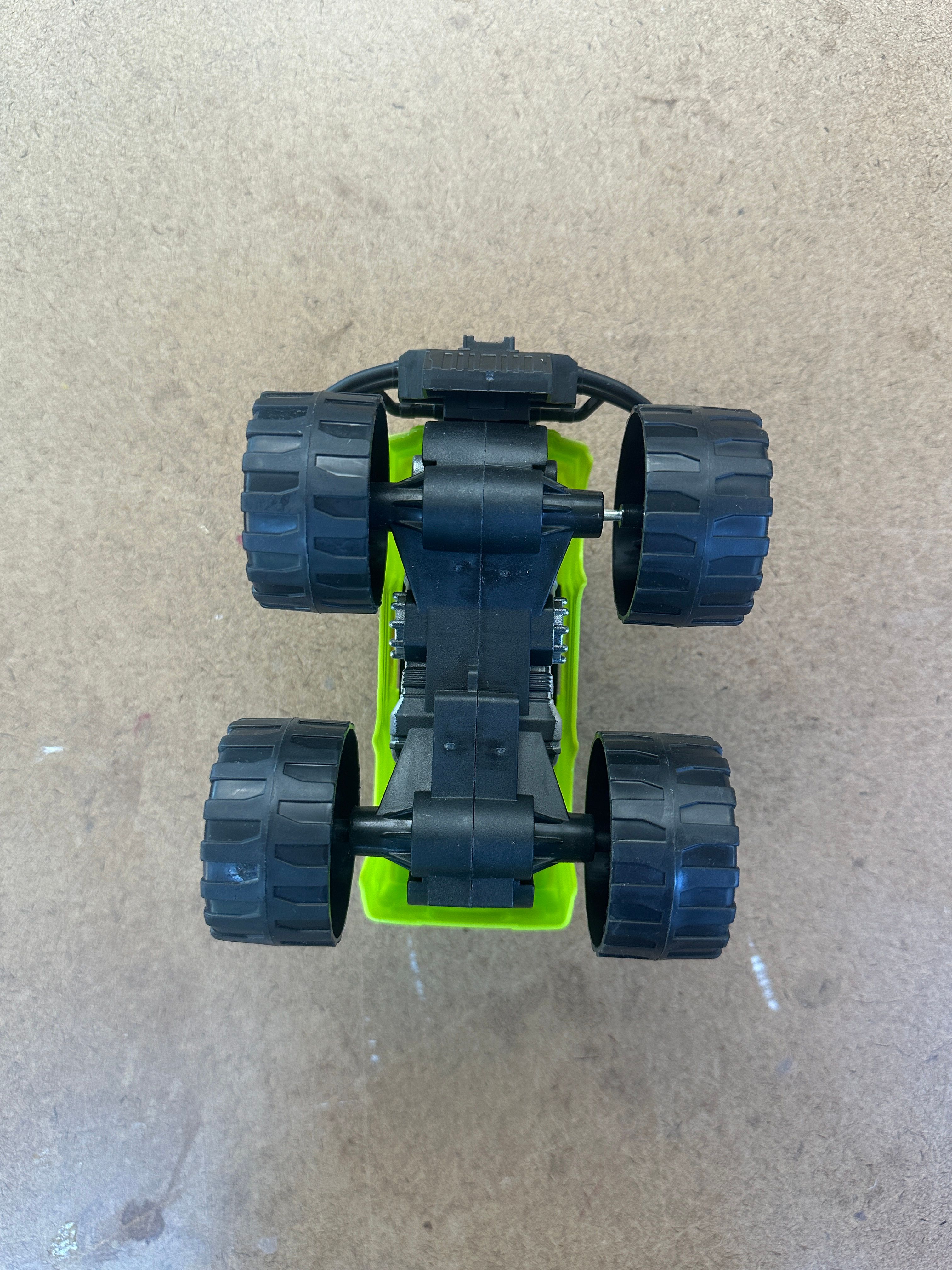
Me and Shloka bought a monster truck. It looks like Hot Wheels, which is not advised to try out, but the "PUSH & GO" text convinces us that this toy offers so much more than just the wheels.
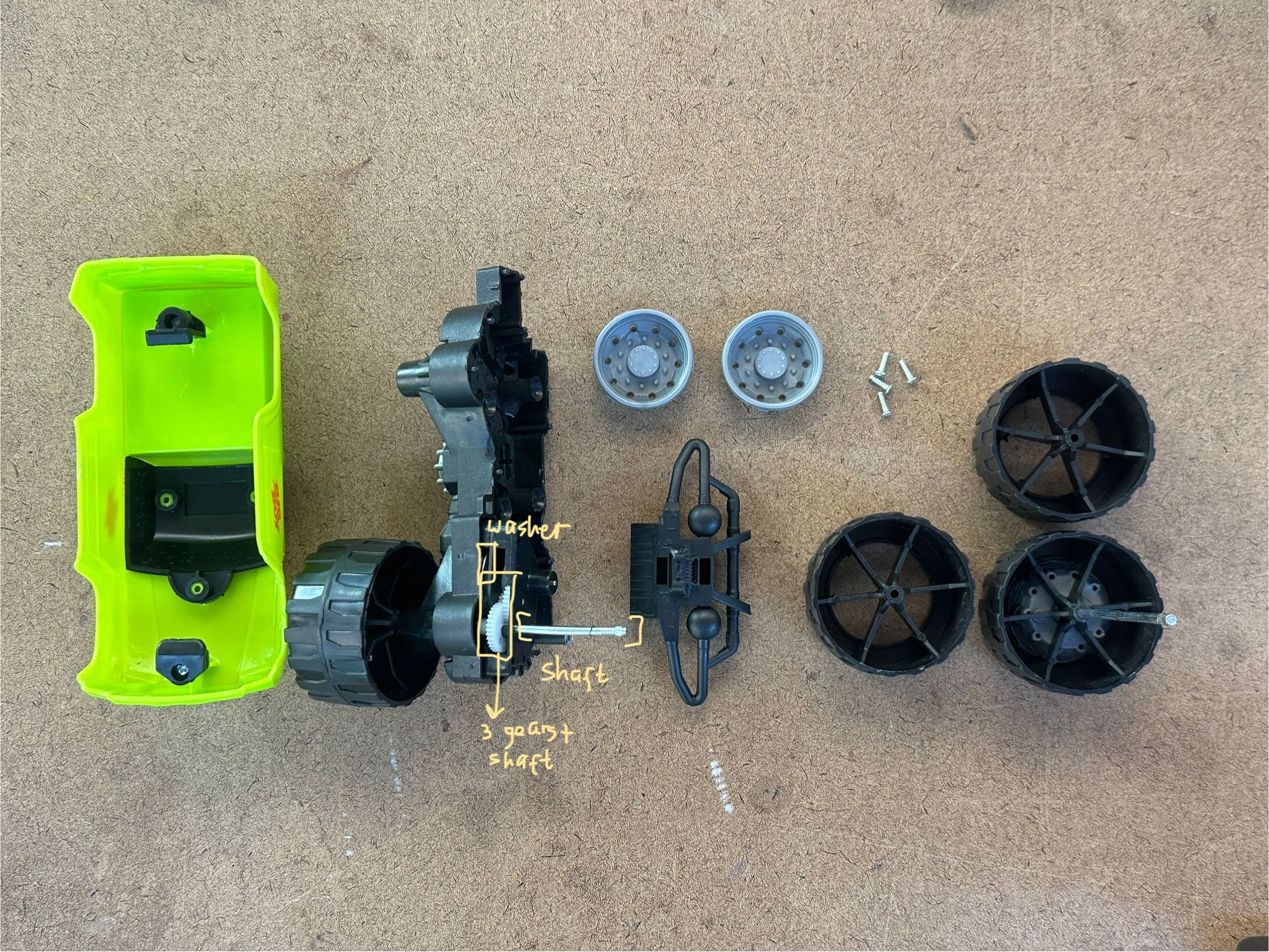
It took a lot of effort to take it apart, and it is my first time too attempting to disassemble a toy with the least amount of damage. I thought I can cleanly unscrew everything, but all the wheels need to be pried open and the body have to be chiseled a little bit to help it separate the 2 part that makes up its body. There are 4 screws on one side of the body that also have to be taken off first before prying the body open.
Inside the body at the back of the car, there is 3 piece of gears (1 is very tiny) with a washer (circular metal disk), but it is transmitting the rotating motion from the 2 gears. The first (and largest) gear is attached to a thin metal shaft (axle shaft - an active shaft that spins along the energy source) that goes to the rear wheel. This gear then transmits to the next gear against it. The next gear transmits to the last (tiniest) gear that is also attached to a tiny shaft (counter shaft - intermediate mechanical shaft used in gearboxes and machinery to transfer power, change rotational speed, and modify torque) between a driving source and a driven componen that connects to a washer. The washer is used to spread the friction around the bolt that is installed against it. for For the front rear, there is no gears and bolts, but it is also connected to a spindle shaft (a stable shaft that only serves as a bearing for the wheels). This conforms to the way the front wheel just rotate smoothly without friction, while the rear wheel have a little of friction, and you can tell something is putting a torque inside it that helps the rear wheel to accelerate more compared to the front. The torque force is amplified with the number of teeth on the gears and converted into linear force. You can also hear the sound of the torque moving as seen in the video below:
A question: why does it have to be 2 gears? Why not 4 or some other arbitrary number? It is probably possible to do other number but for this car purpose, 2 gears might be enough to spread the load without taking much space.
Also why does the car have to be pushed forward to "activate" the movement, instead of the classic pull-back mechanism? is the gears backward?
Elizabeth Kezia Widjaja © 2026 🙂