Inspired by Ford's "What is Code?", I begin to think how it is interesting (or ironic) that a computer consciously takes its time to do trivial human activities like writing an “a” or placing different pixels in such way to create an image or defining the capture moment within a temporal scene to make a video. The time to do such activities is defined and the said activity is programmed to take up that time to finish executing. On the other hand, human usually does not keep the time when they write a letter. We just do.
The midterm theme, Memento vivere is a reminder to live and not just to live, but also to feel the time taken to do an event. Making us conscious of the time and space required to accomplish something. I thought an automated program such as computer or automaton can show a representation of how time passes and can help us feel the time (sidenote: a little ironic because a lot of automations are done to fasten things up, to almost reduce or condense the time, but here we make ourselves conscious of experiencing time using the power of automation where it can execute things on regular interval of time).
I’m thinking if i can do a comparison study of the memento creation between me and my automaton, to see how we both perceive time differently. If my automaton is a dog whose life is shorter than mine, it does not only do things in a calculated, uniform way, I imagine it as dog-like (or creatures whose life is shorter than human or me), where it experience time in a slower way.
To add, as Julien Offroy de La Mettrie concluded his book entitled L’Homme Machine with the sentence: “the body is but a clock”, referring to how moving mechanisms are regulated by time gears, reminiscent of those of a clock, I thought it'd be funny/ironic and yet quiet realistic to see a human synching to a clock in order to work timely. As mentioned in first class, humans are following clock to arrange meetings, metronome and score to practice music in a band, etc. I'd like to create a device which interface prompts us to consciously synching to a clock to perform an activity.
The activity that I pick for the comparison study is: taking pictures that could be combined into a panorama. A panorama will require images that are taken from different viewing position, and then the overlapping sides will be stitchable using a computer graphics software. In our experiment here, we will restrict the movement only on x-axis, and thus the camera will move lateral way.
The movement of the camera is made possible by a set of modular rack and a pinion, but it will be programmed to be uniform in time using the escapement mechanism. A pendulum that swings regularly is attached to a gear, that gear is attached with a shaft to the gear that rotates on the rack, and at the end of the rack a phone holder is attached to it. This creates a transfer of movement from the pendulum to the rack, a transfer of timekeeping command to the camera movement. I have not decided the specific interval of time for the pendulum swing. Now that is for the “programmed” or automaton part, which is handled by time.
For the camera part, we are going to use iPhone 14 Pro camera as this is the one most accessible to me right now. The phone shall be facing the audience (selfie mode) in order to show the camera preview.
The next thing to think about is: the human part. Which part of this picture taking mechanism will be handled by human? We haven’t talked about who pulls the capture trigger button. As we have assigned the other role to move the camera laterally to the automated program, we can assign this open role to human. This mechanism can be put in front of phone camera, and there will be a pointer component that swings back and forth towards the phone screen. The pointed component shall be aligned to the phone so that it taps the capture button every time it comes in contact with the screen. We can have a crank & a shaft, the shaft end is attached with chicken wire to an L shape lever that holds the capture pointer.
Due to the automated system where it moves laterally in time, the human capturer must triggers the capture button using the crank in time as well. The human must adapt to the set time, or they can also choose to 'capture' in their own time too. The latter will create an out-of-sync, polyrythmic-like relationship between the interval of the capture and the lateral movement. When we later stitched the collection of captured images, the output may be more unpredictable if a human just turn the capture crank in an untimely manner.
Mechanism Overview
- Rack (x meter * N pieces) and pinion (1)
- Escapement mechanism (pendulum, pallet & escape wheel) on the pinion side, connected with a rotating shaft to the pinion
- Crank & shaft, the shaft end is attached with chicken wire to an L shape lever that holds the capture pointer
Diagram
Materials
Chipboard
Expectations
I expect to accomplish the rack-pinion and escapement mechanism, not sure if i can include the capture mechanism before the deadline. If it is not able to be included in the deadline, the human can follow the phone and touch the capture button manually.
Inspiration
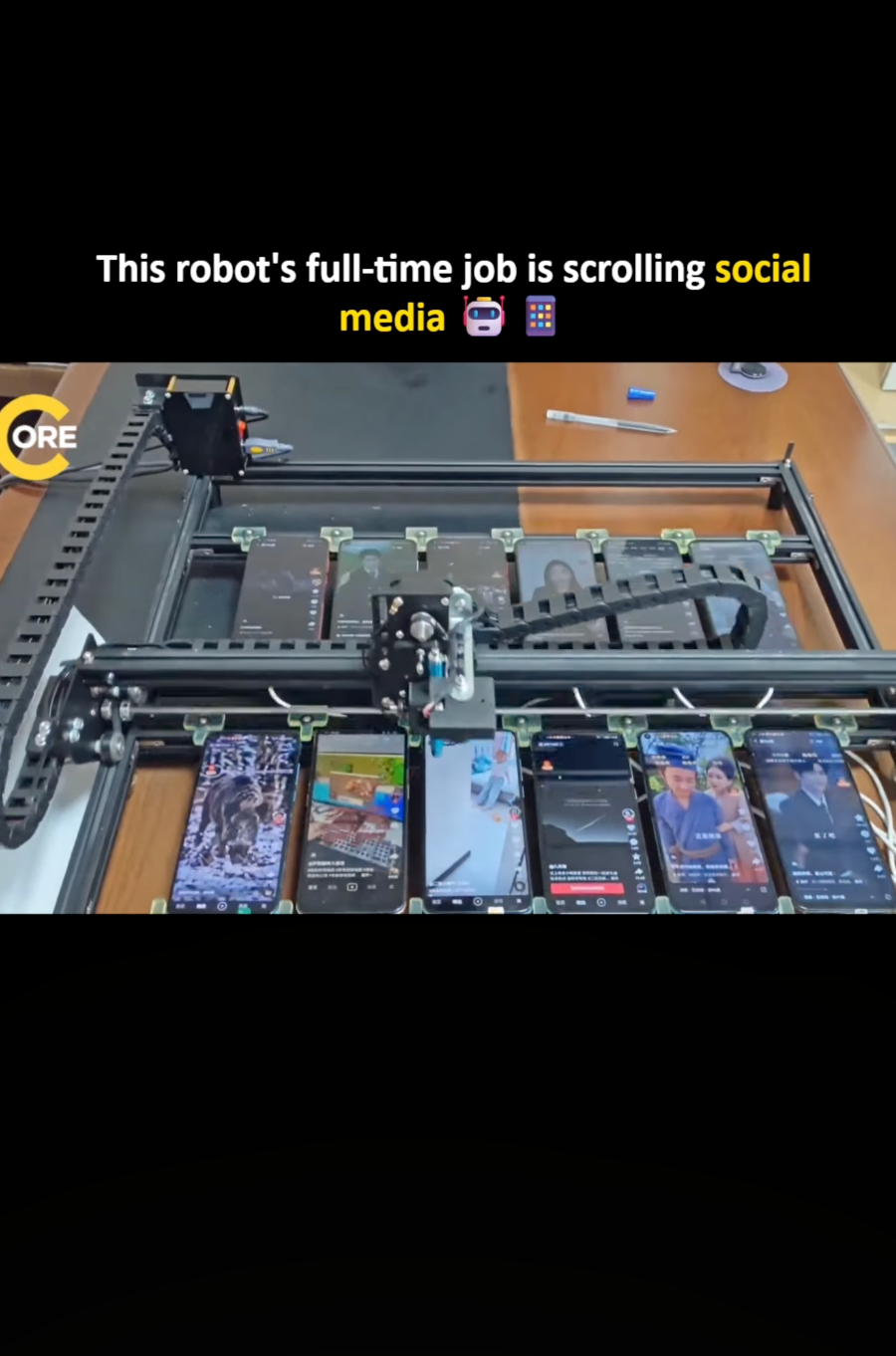
Automated scroll farming on phone - what is the difference of using bot vs human to scroll? What value do we gain or lose with both?
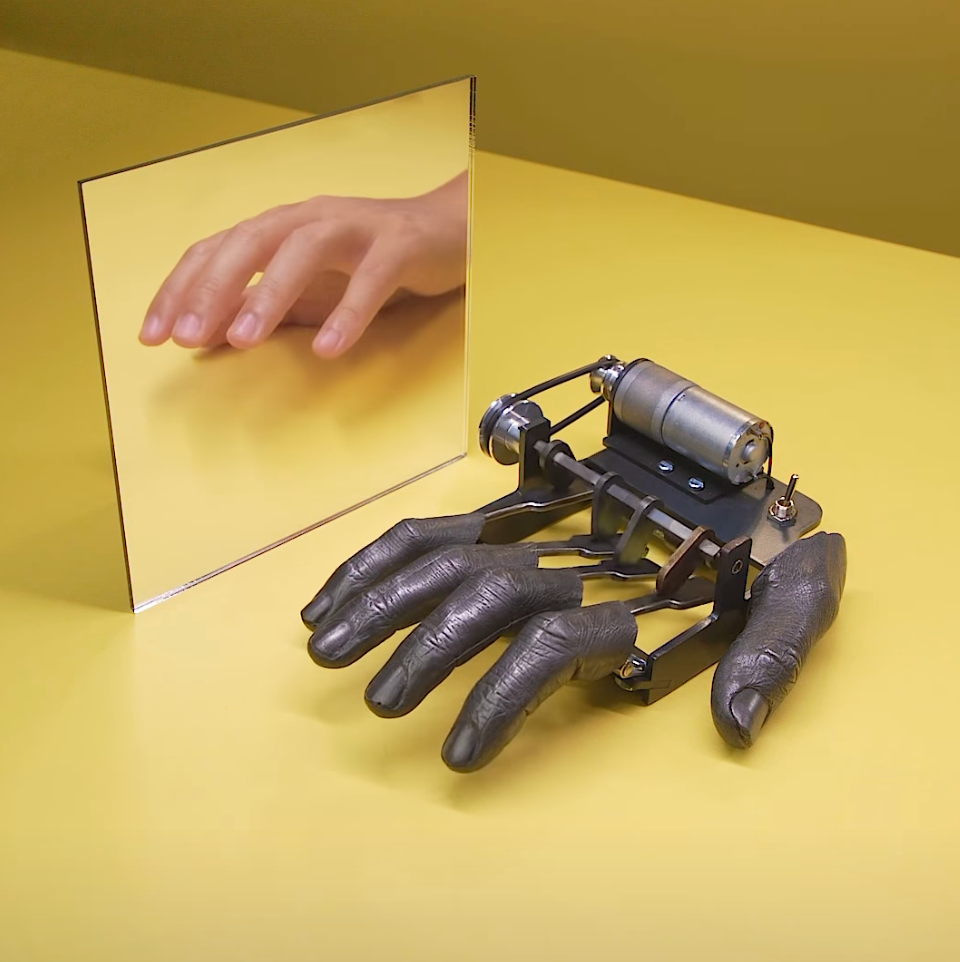
Fingers by Nik Ramage. An eternally tapping mechanical hand that is made to mirror the human hand movement next to it.
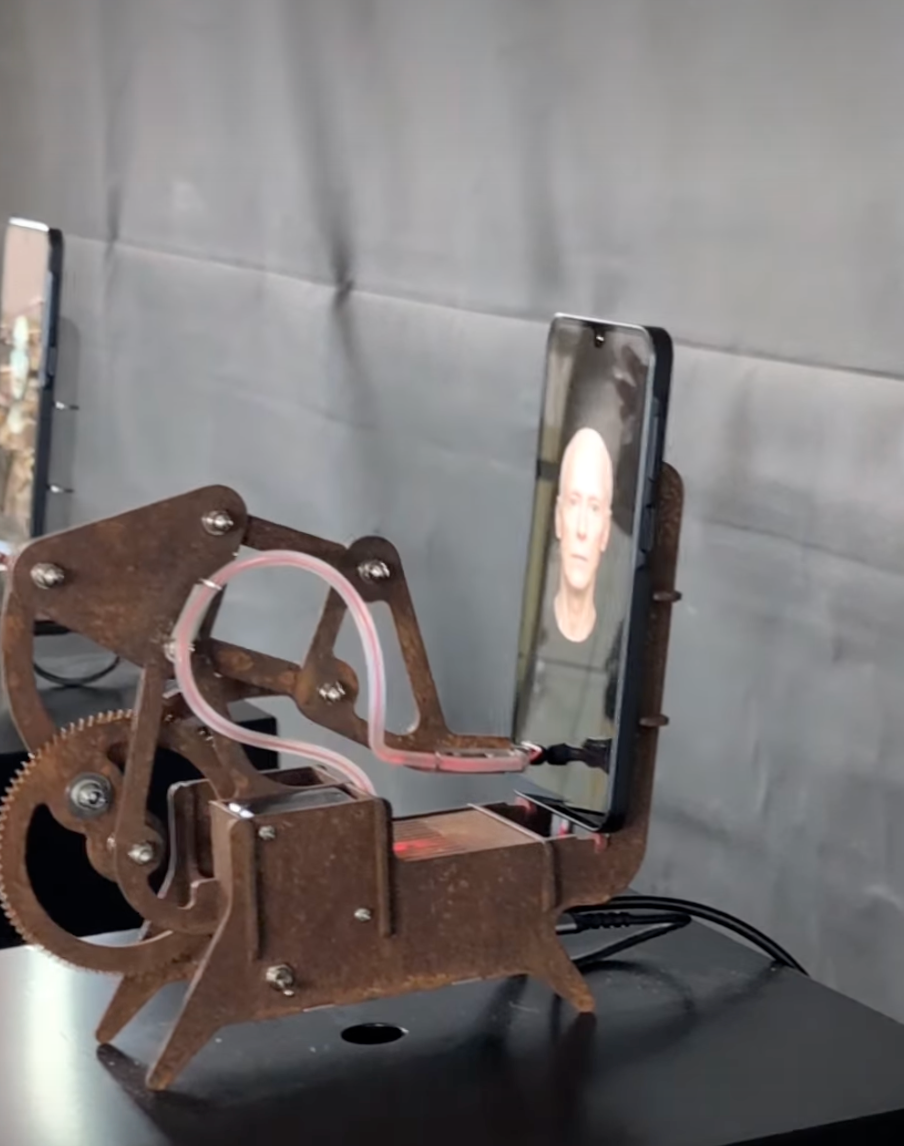
Infinite Scroll by Tjep
And me! I make long panorama fashion photography.

Elizabeth Kezia Widjaja © 2026 🙂