A site that subverts the functionality of the <a> HTML element, as part of an assignment for School for Poetic Computation: Digital Love Language (2024).
Exploring Language as Interface
This work subverts the traditional function of HTML’s <a> and <p> tags by treating writing itself as a clickable interface.
Instead of composing a paragraph within a <p> tag — which passively renders text — the site wraps each word within an <a> tag, transforming the text into a constellation of interactive hyperlinks.
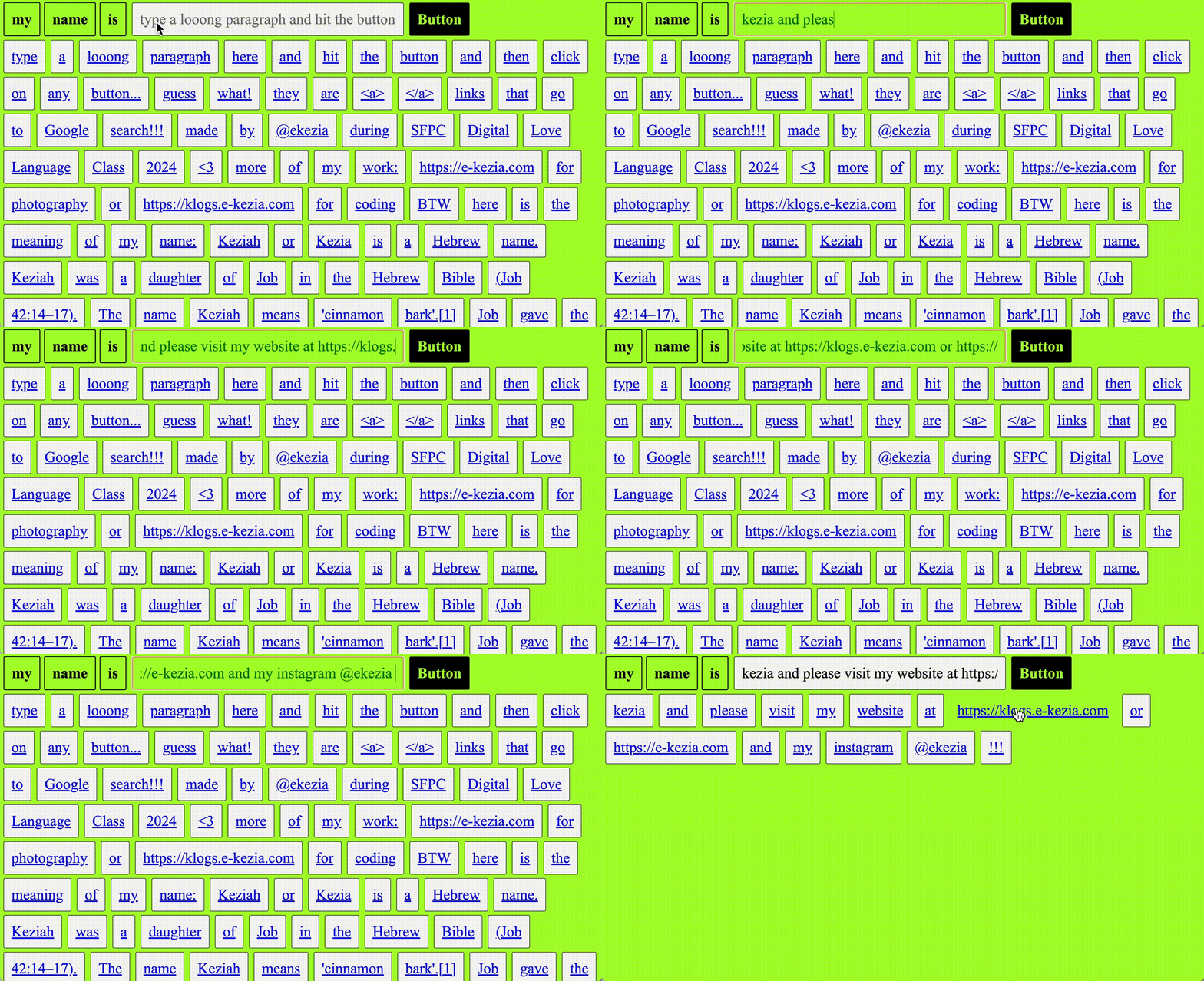
Typing your name / a looong paragraph and see what happens next
💡 Conceptual Background
The project began as an in-class experiment with button UI, developed in response to a “meaning of your name” writing prompt.
By converting my paragraph about the meaning of my name into a field of links, the piece questions:
- What happens when meaning becomes mediated by external search engines?
- Can a paragraph still hold poetic coherence when its structure is fragmented by functionality?
- Where does authorship sit when each word redirects to a corporate algorithmic space (Google Search)?
Through this, the work reimagines HTML not as a neutral markup language, but as a performative system of meaning-making, where the semantics of tags shape how language is experienced.
⚙️ Technical Process
- Input Submission
- The user submits a paragraph through a simple input field.
- Python Script Transformation
- A Python script processes the paragraph:
- Strips whitespace between words.
- Inserts
<a></a>tags around each tokenized word. - Generates a corresponding hyperlink to a Google search of that word (
href="https://www.google.com/search?q={word}").
- A Python script processes the paragraph:
text = "Elizabeth means oath of God and carries the notion of devotion."
words = text.split()
html = " ".join([f'<a href="https://www.google.com/search?q={w}">{w}</a>' for w in words])
print(html)
- Dynamic Rendering
- The resulting text is rendered in the browser as a grid of clickable “buttons.”
- Each click extends the semantic meaning of the paragraph outward into the network — a poetic act of semantic dispersion.
4. Frontend Display
- The paragraph appears visually cohesive but is functionally fragmented — every word redirects elsewhere.
- CSS styling treats each
<a>tag as a button element, echoing UI affordances but breaking linguistic flow.
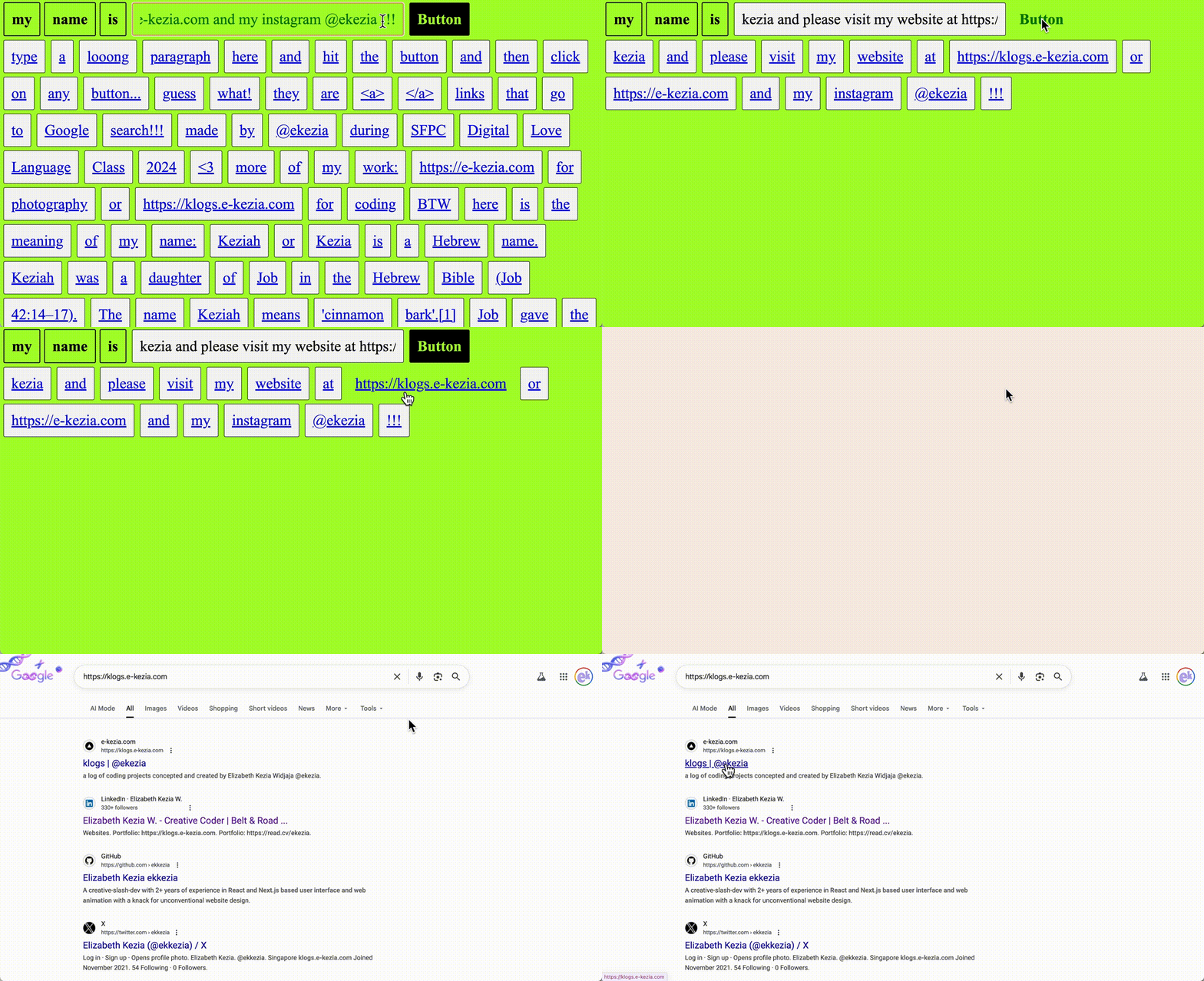
Transforming each word into button then into a link
The site is a single page built with Vanilla CSS, JS and pyodide to enable JavaScript to run a snippet of python code.
The use of Python is unnecessary here as the conversion from paragraph to a group of <a></a> can be done with JavaScript as well. Here I'm just exploring on ways to inkkkkclude Python code in a client-rendered HTML-based website.
Elizabeth Kezia Widjaja © 2026 🙂