The project is a 360 degree studio feature of Baby Diwata, resident DJ of Panic Library.
PANIC360 begins with a flickering, anxiety-inducing prompt — “CLICK ANYWHERE” — an invitation that feels both urgent and meaningless. The user’s first instinctual click triggers a mock CAPTCHA window, styled after Google’s reCAPTCHA, which materializes directly beneath their cursor. The familiar command to select the correct images now feels destabilized, as if the act of verification itself has become performative, recursive, and futile.
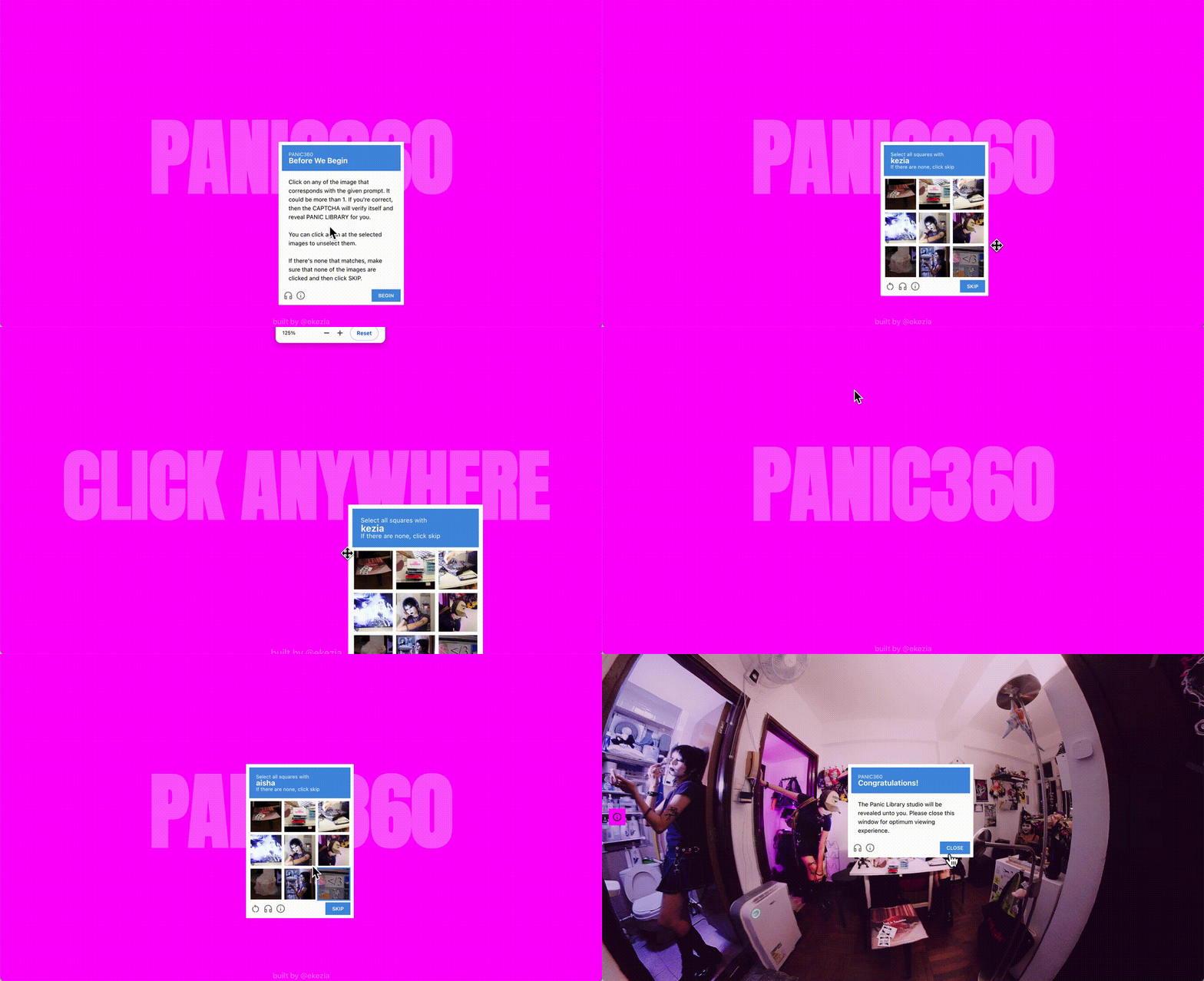
Instead of being a 'human', you need to be a 'panic librarian' to enter
⚙️ Technical Overview
- Frontend Framework: Built in React, rendering dynamic states that alternate between pre-panic (prompt) and post-click (CAPTCHA).
- Animation & Visual Feedback:
The flickering prompt is achieved through CSS keyframe animation controlling text opacity and hue at variable frame intervals to induce perceptual tension.
- Dynamic Positioning:
The CAPTCHA element is spawned at the exact cursor coordinates, using a useState hook to track mouse position on click, simulating a disorienting immediacy.
- UI Simulation:
The interface mimics Google reCAPTCHA’s DOM structure and typographic hierarchy, constructed manually with styled components to heighten realism.
Interaction Logic:
Instead of genuine validation, clicking on the CAPTCHA tiles triggers a series of randomized image changes — an infinite feedback loop where verification can never truly complete.
On success, the website will reveal the studio space in 360 degree, where user can explore with their cursor. The 360 image features four Baby Diwata(s), one reading her favorite Rosalía-covered i-D magazine, another busy working on her set, one taking off her knee boots, and the last one applying her signature punk makeup.
360 view of Panic Library studio
The piece interrogates the psychological mechanics of digital security rituals. The CAPTCHA — originally designed to differentiate human from machine — becomes a theater of anxiety: every interaction feels both self-validating and self-doubting.
By reconstructing the CAPTCHA system as an aesthetic surface, PANIC360 exposes how web interfaces weaponize familiar UX patterns to elicit compliance. The user, trapped between urgency and absurdity, reenacts the verification loop as a kind of performance art — a choreography of panic disguised as authentication.
Elizabeth Kezia Widjaja © 2026 🙂