A React + TypeScript component library built for ParallelChain, centralizing all UI elements in a Turbo monorepo so multiple websites can share the same codebase.
Components follow atomic design principles: modular, reusable, and themeable — and are exposed through a central registry for easy integration. Shared design tokens ensure visual consistency, while the monorepo setup allows rapid updates and scalable collaboration across teams.
🧱 ParallelChain Foundation Design System
While at ParallelChain, I developed the ParallelChain Foundation Design System, a reusable, scalable component library aimed at unifying the company’s UI across multiple applications.
The system is implemented with NextJS + TypeScript + Tailwind and structured following atomic design principles: atoms, molecules, and organisms. This approach ensures every component is modular, composable, and maintainable.
⚙️ Architecture & Technical Implementation
To centralize development and sharing, all UI components are stored in a monorepo using Turbo, inside a packages folder. This setup allows:
- Single source of truth: Components can be imported by any website in the company adopting the same UI system.
- Code reuse and versioning: Changes to a component propagate safely across all dependent apps.
- Scalable structure: Atomic design ensures that new components integrate seamlessly into the hierarchy.
The DesignSystem module serves as a registry of all UI components:
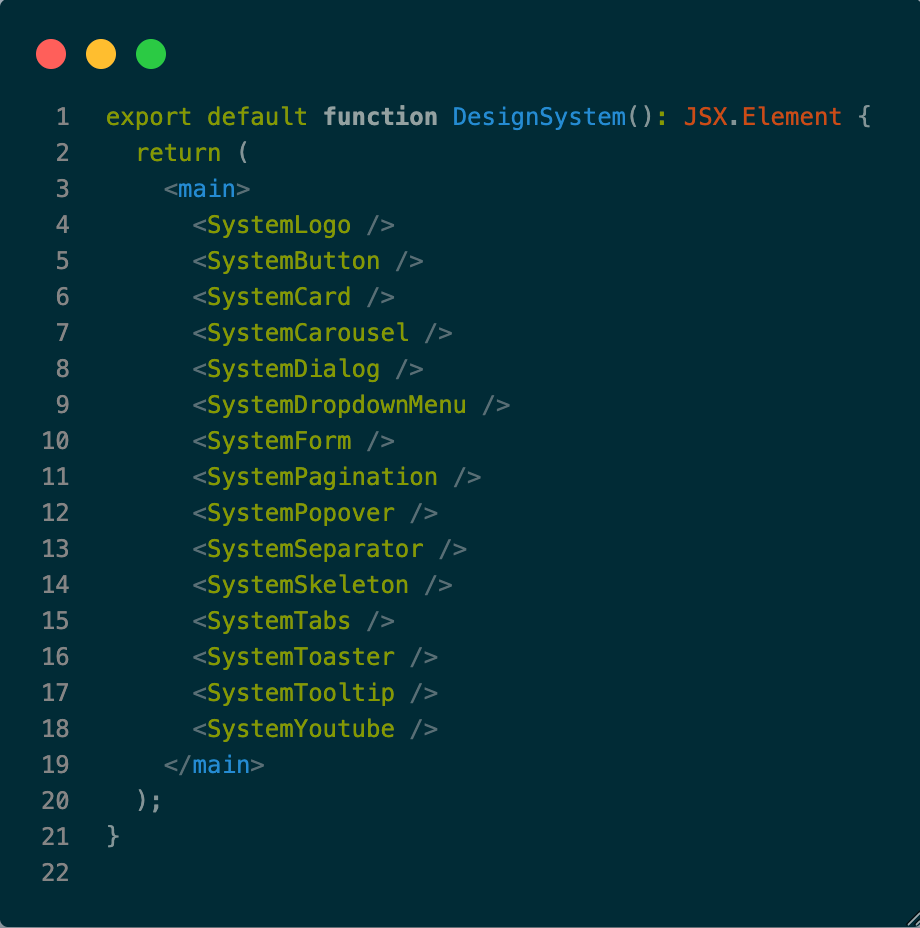
Each component, from interaction elements like buttons and dropdowns to feedback patterns like toasts and skeletons are fully self-contained, type-safe, and themeable. Shared design tokens (colors, spacing, typography) enforce consistency across all applications.
🧩 Outcomes
- Created a centralized, sharable UI library for multiple ParallelChain websites.
- Enabled faster prototyping and visual consistency across teams.
- Demonstrated how atomic design + monorepo tooling (Turbo) can scale design systems in a corporate environment.
This project reinforced the value of thinking of UI as a distributed, reusable codebase rather than isolated components — bridging design intent with engineering efficiency.
Elizabeth Kezia Widjaja © 2026 🙂