Fashion editorial in the form of Google Street View-inspired user interface on self-coded website
This ongoing project reimagines the fashion editorial as an experiential journey rather than a series of static images. Shot across Jakarta, Hong Kong, Singapore, and Cambodia, each iteration centers on a model equipped with a 360° camera. The camera captures stills every ten to twenty steps, while I remotely direct and trigger each shot — constructing a distributed authorship between subject and photographer.
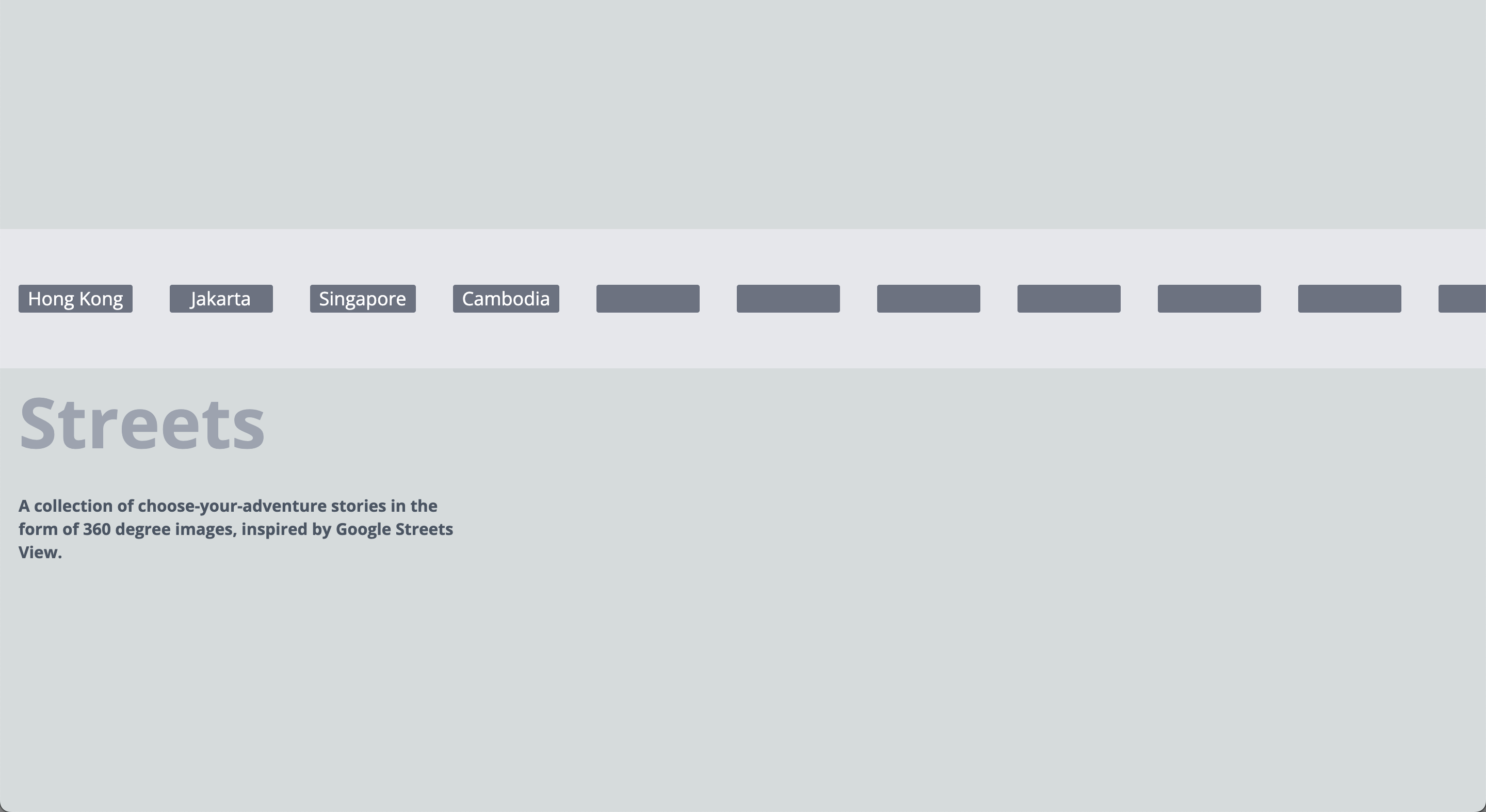
Streets menu on its landing page
Rather than relying on dramatized poses or staged moments, the project foregrounds movement, geography, and temporal continuity. Each frame becomes a trace of the character’s trajectory through urban space — a continuous narrative of walking, rather than a collage of editorial highlights.
⚙️ Technical Implementation
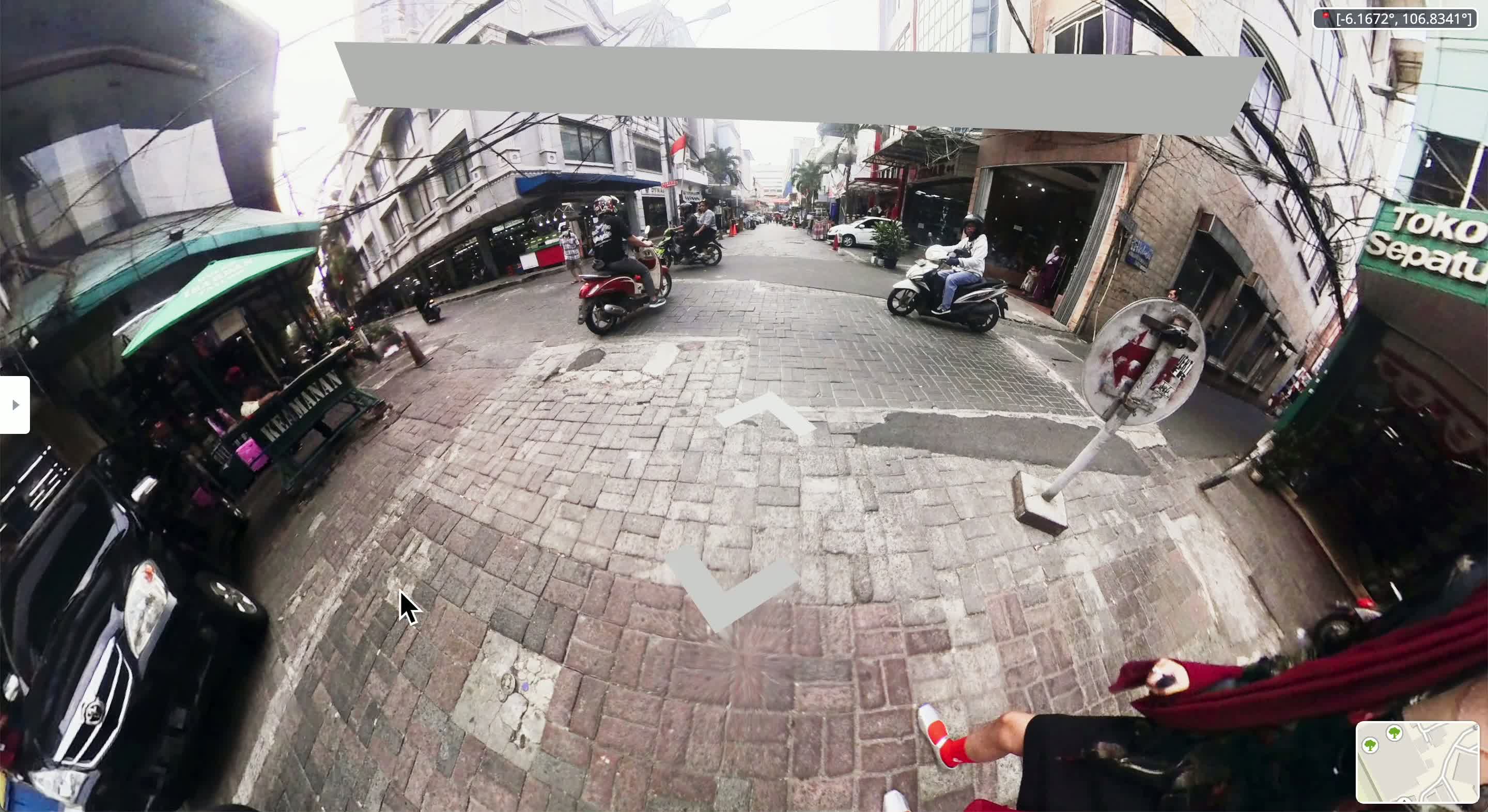
Captured 360° shots are uploaded to a custom database, then rendered on the frontend using React Three Fiber. Each image is textured onto a 3D sphere, allowing viewers to pan and rotate around the environment from the character’s point of view.
To extend the metaphor of travel, interactive arrows are custom-coded to mirror the real-world directional logic of each street. When a viewer clicks an arrow, the scene transitions to the next location node — creating a fluid, map-like navigation reminiscent of Google Street View, but infused with the aesthetic intentionality of a fashion editorial.
Tech Stack:
- React Three Fiber – for 3D scene composition and 360° image texturing
- Three.js – for low-level 3D geometry, camera control, and texture mapping
- Custom Database (Firebase / Supabase) – for storing scene metadata and images
- Remote Camera Trigger System – for controlled 360° capture sessions
- Geo-based Scene Linking – for mapping directional arrows to street paths with maplibre-gl on /jakarta
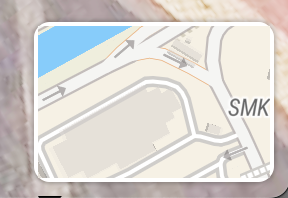
map as an indicator of where the character of the story is at
🧭 City-Specific Navigation Systems
Each city explores a different narrative structure through spatial navigation, using the map and interface as storytelling devices:
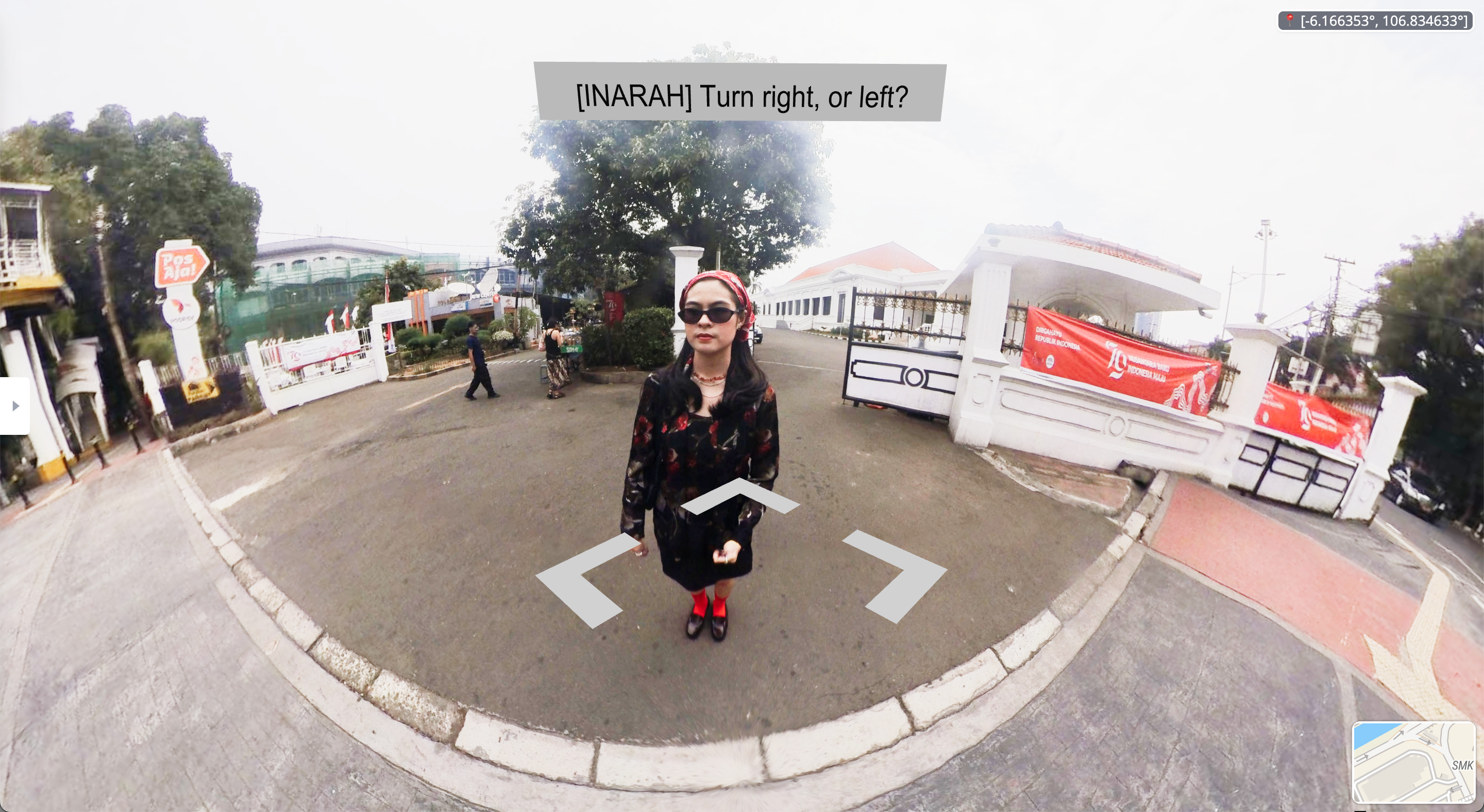
1. Jakarta – Features two branching linear paths that diverge based on the user’s first directional choice (left or right). This mirrors the dual urban rhythm of Jakarta’s dense street grids and alley networks, emphasizing the weight of the first decision.
2. Hong Kong – Presents two parallel columns, showing the story from two different characters’ points of view simultaneously. In the center, an interface inspired by the Carousell app’s modal layout provides contextual information about the surroundings, creating a hybrid between social feed and narrative viewport.
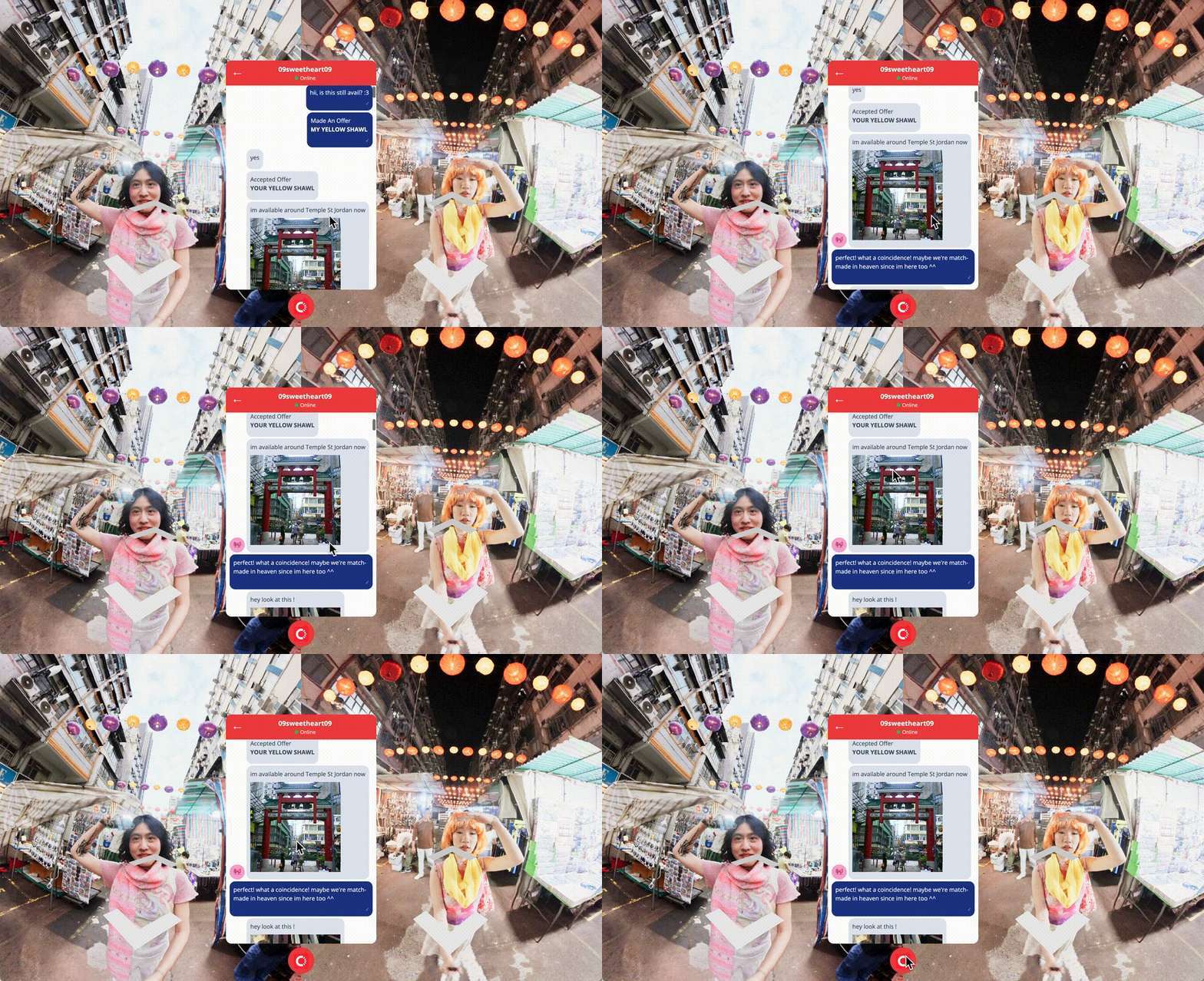
A meeting in Temple Street, Hong Kong to exchange an item via Carousell (a used goods shop app)

The Hong Kong 360 edition features 2 columns where the 2 characters will meet in the middle of the Temple Street, partly inspired by Cibo Matto's Sugar Water MV by Michel Gondry
3. Singapore – Experiments with vertical navigation, an uncommon directionality in both fashion editorials and Google Street View. The experience simulates ascending through architectural layers, inviting users to move “upward” through the built environment — rooftops, terraces, and skybridges — to challenge conventional, ground-based navigation.

a fight scene at a rooftop in Singapore
The project subverts the conventions of fashion photography by treating location as protagonist and journey as narrative. The 360° interface allows viewers to navigate not just through visual composition but through space and time, collapsing the distance between documentary, performance, and design.
Each city — Jakarta, Hong Kong, Singapore, and Cambodia — becomes both a backdrop and a character, its streets, sounds, and atmospheres shaping the visual rhythm of the story.
Elizabeth Kezia Widjaja © 2026 🙂